





– Srikanth Kumar
Union Budget 2026–27 marks a clear shift in India’s fiscal storytelling. If earlier budgets were about firefighting, first a pandemic, then global shocks, supply chain disruptions, and inflation, this one attempt something more ambitious: stepping back from emergency mode and setting the foundation for where India wants to be over the next decade.
The government has been explicit about its intent. The budget places long-term vision at the forefront, arguing that the domestic economy has regained enough strength to move away from short-term stimulus and toward structural reform, resilience, and sustainable growth. But as with every budget that claims to be “forward-looking,” the real question remains: does Budget 2026 deliver a masterstroke, or does it leave too many gaps unresolved?
To answer that, we need to follow the budget exactly as it unfolded, starting with the context, moving through its priorities, and finally examining the big debates it has triggered across industry, markets, and policy circles.
The Context: From Crisis Management to Confidence Building
Over the last few years, India’s budgetary approach has been shaped by necessity rather than choice. The immediate post-Covid budgets were unapologetically interventionist.
Infrastructure spending was ramped up aggressively, welfare schemes were expanded, and fiscal discipline was deliberately loosened to prevent growth from collapsing. Those budgets were about survival and recovery. By contrast, Budget 2026 arrives at a moment of relative stability. Growth has normalised, consumption has recovered, credit flows have improved, and India’s macro fundamentals look stronger than many peer economies. Inflation, while still monitored closely, is no longer the singular threat it once was. Against this backdrop, the government makes a strong case that the era of heavy, short-term support has served its purpose.
Fiscal Consolidation: The Backbone of the Budget
One of the most closely watched signals in Budget 2026 is its firm commitment to fiscal consolidation. Moving away from deficit expansion justified by extraordinary circumstances, the budget reinforces a medium-term path toward debt sustainability. By adhering to a clear glide path for deficit reduction and reaffirming debt targets, the government aims to reassure investors, rating agencies, and global institutions that India’s growth will not be driven by excessive borrowing.
Supporters view this as a sign of policy maturity, arguing that fiscal discipline preserves flexibility for future shocks and prevents today’s growth from becoming tomorrow’s burden. Critics, however, question whether consolidation at this stage could dampen momentum amid global uncertainty. The debate, therefore, is not about the need for consolidation, but about the timing.
Infrastructure: From Expansion to Efficiency
Infrastructure remains central to the budget narrative, but the tone has changed noticeably. Instead of headline-grabbing jumps in capital expenditure, Budget 2026 focuses on deepening the quality and efficiency of infrastructure spending.
The government’s approach suggests that the big push phase is giving way to consolidation and optimisation. Multimodal connectivity, logistics efficiency, and better coordination between central and state projects receive more attention than sheer scale.
This reflects an important recognition: infrastructure is no longer just about spending money; it’s about extracting economic value from what has already been built. Faster execution, improved asset monetisation, and better project selection are positioned as the next frontier. For industry, this shift is welcome but cautious. While improved efficiency boosts long-term competitiveness, companies dependent on large capex cycles worry about whether the pace of new project announcements could slow over time.
Manufacturing: Building Resilience, Not Just Capacity
One of the clearest strategic priorities of Budget 2026 is strengthening India’s manufacturing base. However, the emphasis is less on flashy incentives and more on ecosystem development. Rather than announcing a wave of new subsidy-driven schemes, the budget builds on existing frameworks to enhance supply chain resilience, reduce input bottlenecks, and improve the ease of doing business for manufacturers. The intent is to position India as a stable, reliable production hub in a world that is actively diversifying away from concentrated global supply chains.
This is where the budget subtly signals a shift from “Make in India” as a slogan to “Sustain Manufacturing in India” as a policy objective. The debate here is nuanced. Optimists argue that this steady, reform-oriented approach avoids the distortions caused by excessive incentives. Sceptics counter that in an aggressively competitive global environment; incrementalism may not be enough to attract large-scale manufacturing relocation.
Markets and budgets: The volatile duo
Budget 2026 triggered sharp volatility in the stock markets. On Budget day, the Sensex fell nearly 1,550 points (approximately 2%) and the Nifty dropped about 500 points ( approximately 2%), reflecting investor disappointment over tax changes and the lack of immediate market triggers. However, sentiment stabilized quickly, with the Sensex rebounding around 950 points and the Nifty recovering to near 25,100 in subsequent sessions. Overall, markets responded with short-term caution but retained confidence in the budget’s long-term macro stability.
Ease of Doing Business: Reform Over Rhetoric
One of the most consistent themes in Budget 2026 is reforming processes rather than launching new schemes. Improving ease of doing business is framed not as a one-time objective but as an ongoing structural effort.
The budget stresses simplification, predictability, and faster dispute resolution. While these measures may not make headlines, they matter deeply for investor confidence. Here, the government appears to be betting that credibility built through quiet, continuous reform will outperform loud but shallow announcements. The challenge, of course, lies in execution. India’s ease-of-doing-business reforms have historically faced implementation gaps, especially at sub-national levels. Whether Budget 2026 marks a genuine breakthrough or another iteration of intent remains a key point of debate.
The Announcements Everyone Is Talking About
First, the unmistakable signal that the government is comfortable stepping back from aggressive stimulus. This psychological shift matters as much as any policy change, because it reframes expectations across markets and industry.
Second, the emphasis on medium-term thinking over electoral immediacy. Many analysts view this budget as less populist than its predecessors, suggesting confidence in economic fundamentals rather than anxiety over short-term sentiment.
Third, the growing reliance on policy stability rather than novelty. The absence of dramatic tax overhauls or surprise announcements has itself become a talking point. Supporters see predictability as a strength; critics see it as a lack of ambition.
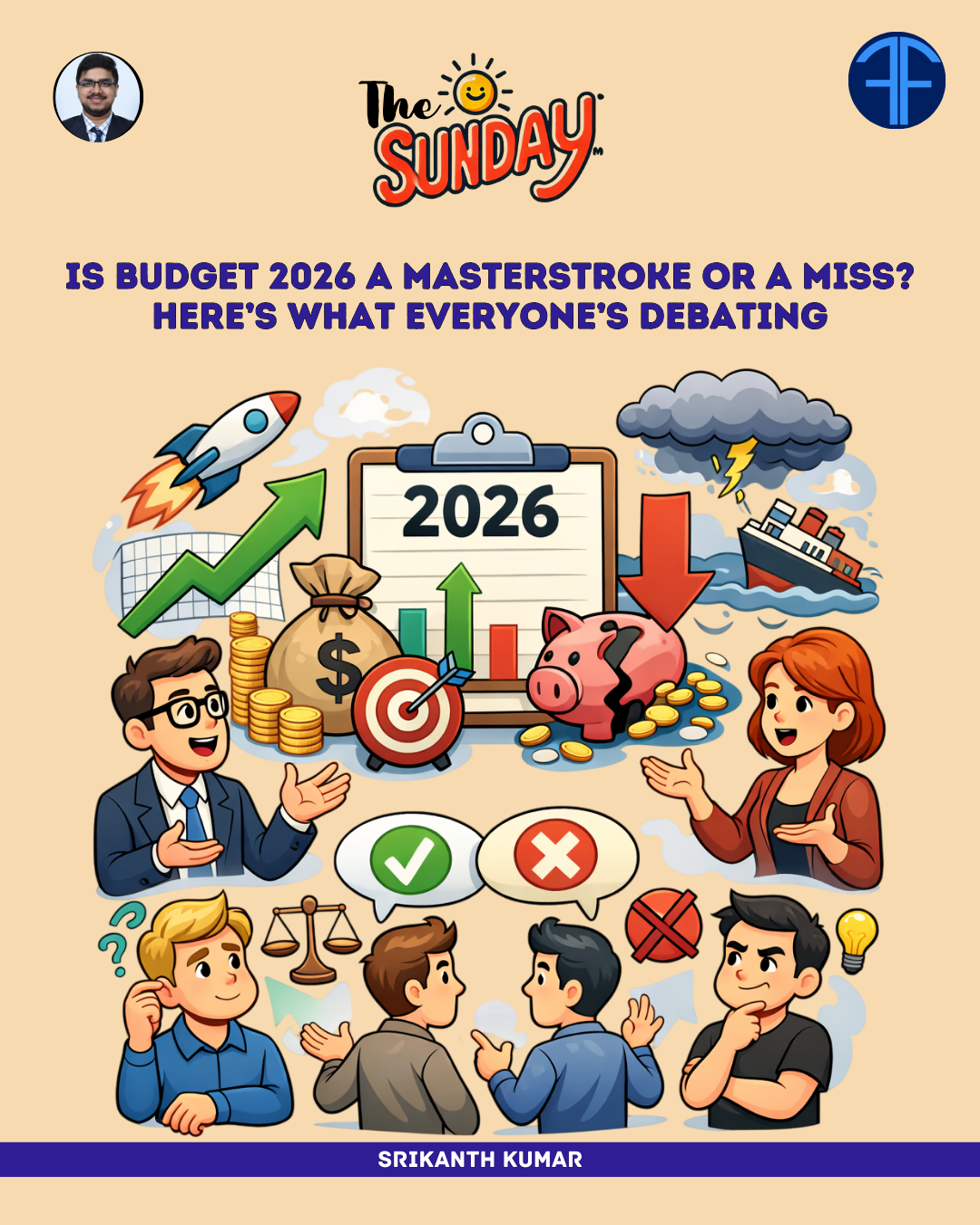
So, Masterstroke or Miss?
The answer depends entirely on perspective. If one expects a budget to deliver immediate growth jolts, headline-grabbing giveaways, or dramatic reform announcements, Budget 2026 will feel underwhelming. But if one judges a budget by its consistency, restraint, and alignment with long-term economic goals, this budget makes a compelling case for itself.
Budget 2026 is not a revolution, but it is a continuation with intent. It assumes that India’s economy is strong enough to walk without constant crutches and that the next phase of growth will come from institutional strength rather than fiscal adrenaline.
That is a risky bet. But it is also a confident one. In that sense, Budget 2026 may not win universal applause today, but its true verdict will only emerge over the next few years, when we see whether patience, reform, and discipline deliver the resilient growth story the government is betting on. And that, more than any single announcement, is why the debate around this budget is far from settled.





Leave a comment