





Editor: Srikanth Kumar
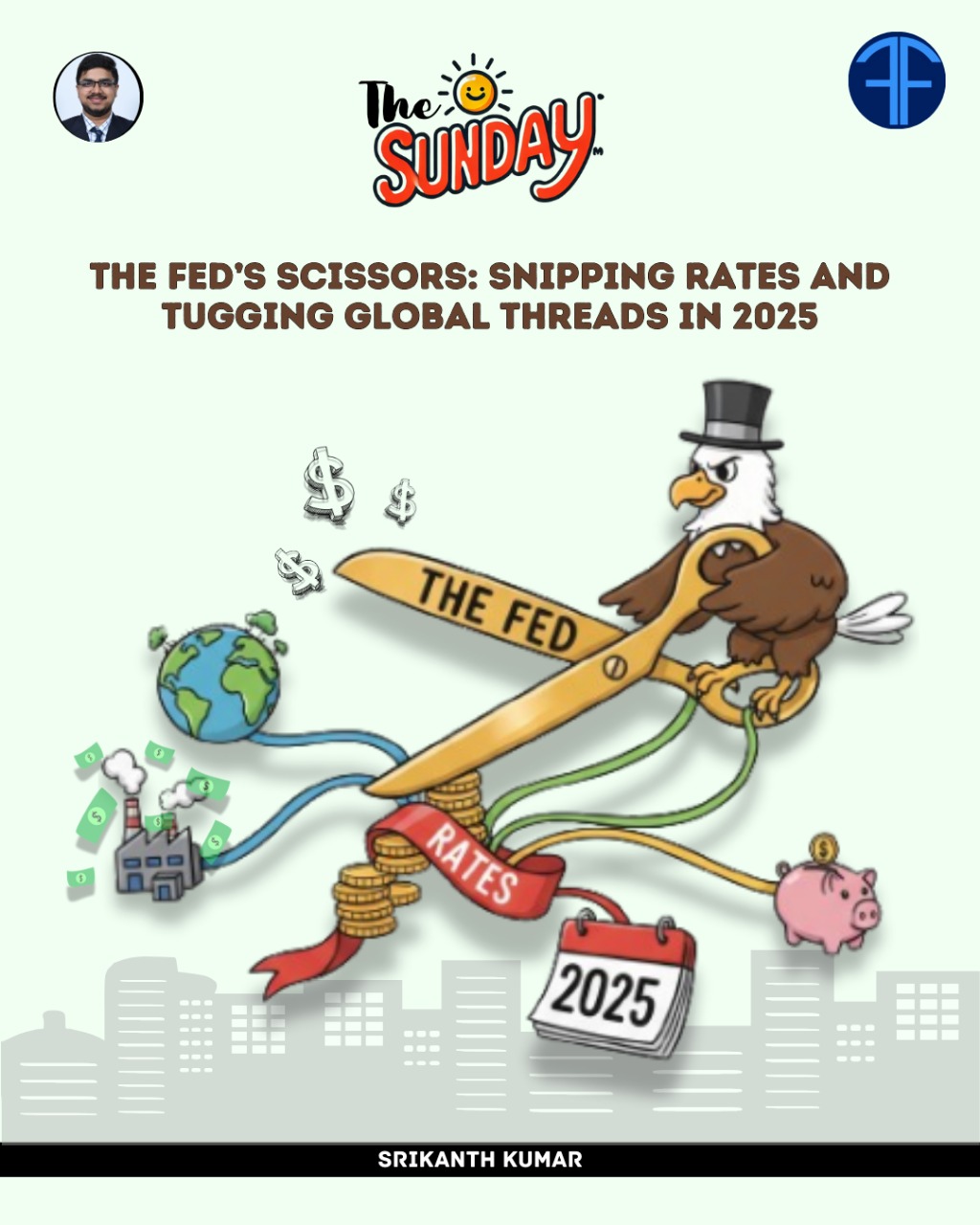
In today’s fast-moving world, slowing down isn’t just costly, it can be both a game changer and a deal breaker. As the US grapples with the slowing down of the economic growth, the Fed decided to add some charcoal to the fire. This move could reshape financial markets, influencing everything from Wall Street stocks to the Indian Sensex and Nifty, the US dollar, and even cryptocurrency trends.
What Happened:
The federal funds rate is the interest rate at which banks lend balances to each other overnight. It influences a wide range of borrowing costs, from credit cards to mortgages, and is one of the Fed’s most powerful tools for steering the economy. On September 17, 2025, the U.S. Federal Reserve decide to shift its prior stance from a tightening stance to one of loosening. On this day the Federal Reserve announced its first interest rate cut of the year, lowering the federal funds target range by 25 basis points to 4.00-4.25%. By cutting the rate from 4.25-4.50% down to 4.00-4.25%, the Fed has taken a measured but important step toward providing relief to borrowers.
1.Easing inflationary pressures: Years of inflationary pressure has slowed down, giving the Federal Reserve a lot of flexibility to adjust rates and ignite a fresh wave of economic growth.
2.Signs of labour market cooling: Hiring has slowed, and wage growth has stabilized, suggesting the economy is no longer at risk of overheating.
3.Weaker business investment: With recent drastic reforms, firms are looking out for any uncertainty in policy changes because of which corporations have shown more caution capital spending, reflecting uncertainty about demand.
Impact on America
1.Ease in borrowing due to lower interest rates: Lower rates provide much relief to households as it has a significant impact on mortgages, auto loans, and credit cards. While the reduction is modest, even a quarter-point cut can improve affordability and free up disposable income for consumers.
2.Consumer Loans: For an economy that runs on consumerism, cheaper costs of auto financing, student loans, and personal credit, would encourage more spending on durable goods.
3.Relief for Small Businesses: Small and medium-sized enterprises (SMEs) are often more sensitive to interest rate changes than large corporations. Lower rates mean reduced debt service costs, allowing businesses to reallocate funds toward hiring, technology upgrades, or expansion.
o Startups may find it easier to access credit lines.
o Retailers could benefit from stronger consumer demand.
o Service industries may see higher discretionary spending from households.
4.Increase in hiring and job creation: The lower costs due to rate cuts have led to an increase in production activities, which in turn has increased the demand for high skilled labourers, thus boosting employment.
Immediate Market Reaction in India
1.Indian Markets: The Sensex and Nifty opened higher ahead of the Fed decision, reflecting optimism over global liquidity inflows.
2.Rupee vs Dollar: The rupee strengthened, while the dollar weakened slightly due to expectations of lower US yields.
3.Gold and Bonds: Gold prices gained as investors sought safe-haven assets, while bond yields declined on easing rate expectations.
Implications of US Fed Rate Decision on India
The decision to pause rate cuts in the US could lead to foreign institutional investors (FIIs) pulling money out of India and shifting it to US sovereign bonds, as they offer higher returns. US bonds become more attractive because of the higher interest rates, offering more security and returns compared to Indian equities or debt. As a result, these investors will sell their Indian holdings, moving capital into the US where returns are assured.
Risk of Rupee Devaluation
This shift is compounded by the risk of currency devaluation in India. The Indian Rupee is expected to weaken further against the US Dollar, making dollar-denominated assets even more appealing. In turn, this will put pressure on the Indian market, making it harder for companies to raise capital, while pushing the Rupee lower, leading to inflationary pressure in India. This movement could create a volatile investment environment, reducing the attractiveness of emerging markets like India in the short term.
Risks and Considerations
- Risk of Inflation Resurgence: While the Fed’s rate cuts aim to stimulate growth, they also carry the risk of reigniting inflation. Lower borrowing costs can boost spending and investment, which, if demand grows faster than supply, may push prices
upward. For households, this could mean higher costs for everyday goods and services in the months ahead. For businesses, inflation can squeeze profit margins, especially if input costs rise faster than prices can be adjusted. - Policy Credibility: With markets and investors closely watching the shifts in policy, any unclear change can lead to the loss of confidence, thus making monetary policy less effective.
- Global Volatility: Changes in the Federal Reserve’s policy rates carry significant global risks. A rate cut can trigger large capital flows into emerging markets, but it can also create currency volatility, asset bubbles, and financial instability if not managed carefully. For economies heavily reliant on foreign investment, sudden shifts in U.S. rates can disrupt credit conditions and trade balances. Additionally, prolonged low rates may encourage excessive borrowing, raising concerns about debt sustainability worldwide.
Conclusion
The Federal Reserve’s rate cut in September 2025 marks a decisive shift in U.S. monetary policy which is a move aimed at stimulating growth amid slowing economic momentum. While the easing offers relief to borrowers, boosts consumer spending, and encourages business investment, it also brings a set of complex global repercussions. For India and other emerging markets, the decision carries opportunities in the form of capital inflows, but also risks such as currency volatility, inflation pressures, and shifts in investor sentiment.Ultimately, the Fed’s actions underscore the delicate balancing act of fostering growth while safeguarding stability, both at home and across the interconnected global economy. How policymakers and markets respond in the months ahead will shape not just the U.S. economic outlook, but the broader trajectory of global finance.






Leave a comment