






Editor: Khushi Koolwal
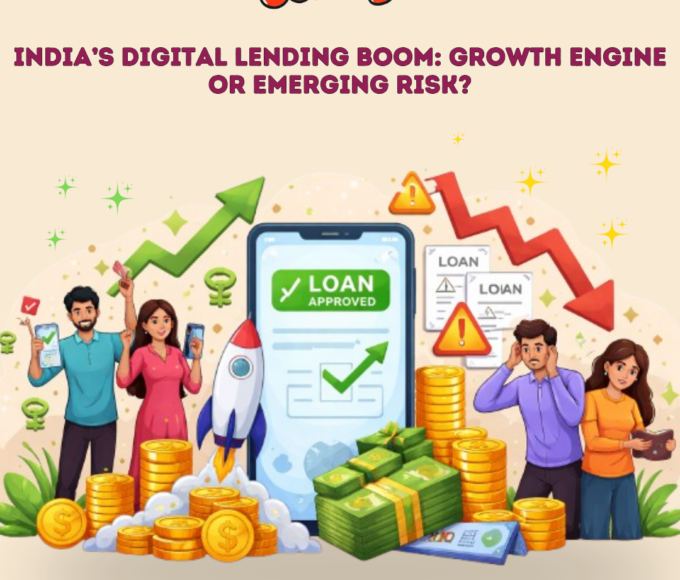
In recent years, India’s banking sector has been seen as one of the strongest pillars of its fast-growing economy. Bad loans (Non-Performing Assets or NPAs) which were once the biggest weakness of banks, have now come down to their lowest level in many years. Also, banks have started keeping enough money aside to cover possible losses, and lending has grown strongly again, reaching double-digit growth.Yet, beneath this impressive surface, lies a serious issue which is the steady rise of unsecured lending and the risk of a new bad loan cycle: a “Bad Loans 2.0”.
The Illusion of Clean Balance Sheets
India’s gross NPA ratio fell to around 2.8% in 2025, the lowest in over a decade,compared to nearly 11% in 2018. Public sector banks, once burdened by corporate loan defaults (Bad Loan 1.0), have turned profitable and aided bye strong recoveries and improved asset quality.However, post-pandemic the composition of bank lending has changed significantly. Over 60% of new credit growth is now coming from retail and personal loans like housing, credit cards, vehicle loans, and consumer durables,much of it unsecured. Non-banking financial companies (NBFCs), which help provide loans to people and small businesses who may not get them easily from banks, are also giving more loans in these areas to keep growing. As a result, there is now a fast increase in small, risky loans that can easily be affected if interest rates go up or people lose their jobs.
RBI Steps In: Controlling the Loan Risk
In mid-2025, the Reserve Bank of India (RBI) warned banks and NBFCs about the rapid rise in unsecured loans, urging them to strengthen their lending standards.Ex-RBI Governor Shaktikanta Das highlighted that while the total number of bad loans that banks officially report is going down and overall it is looking good but there are some areas of lending like personal loans, credit cards, small loans, etc. where the risk of people not paying back is quietly increasing.
To address this, the RBI has taken several steps in 2025:
- Stricter Capital Rules:
RBI increased the risk weight on unsecured personal loans from 100% to 125% (and up to 150% for credit cards) means banks and NBFCs must keep more funds aside for risky loans, making them lend more carefully. - Expected Credit Loss (ECL) Model:
From April 2027, lenders will have to estimate possible future losses on loans and set aside money in advance. This helps identify bad loans early, especially in unsecured lending. - Tighter Rules for Digital Lending:
RBI’s Digital Lending Directions 2025 make loan apps more transparent and accountable. Lenders must clearly show all charges and can’t cover more than 5% of loans under default guarantees. - Closer Watch on Defaults:
RBI has flagged rising stress in small personal loans (below ₹50,000), where delinquencies rose to 3.6% by March 2025. It’s now tracking these trends closely to prevent another bad loan cycle.
Conclusion
India’s banking story today is one of optimism with profits rising, credit expanding, and global investors taking notice. Yet, as history reminds us, the time to act on risk is not when defaults spike but when growth feels most comfortable. The “Bad Loans 1.0” crisis of the 2010s was corporate-led, the next one, if unchecked, could be consumer-led. The real challenge for India’s financial system isn’t just growing fast, but making sure it doesn’t grow in a risky way. In the end, what happens behind the numbers decides whether today’s boom stays strong or turns into the next crisis.






Leave a comment